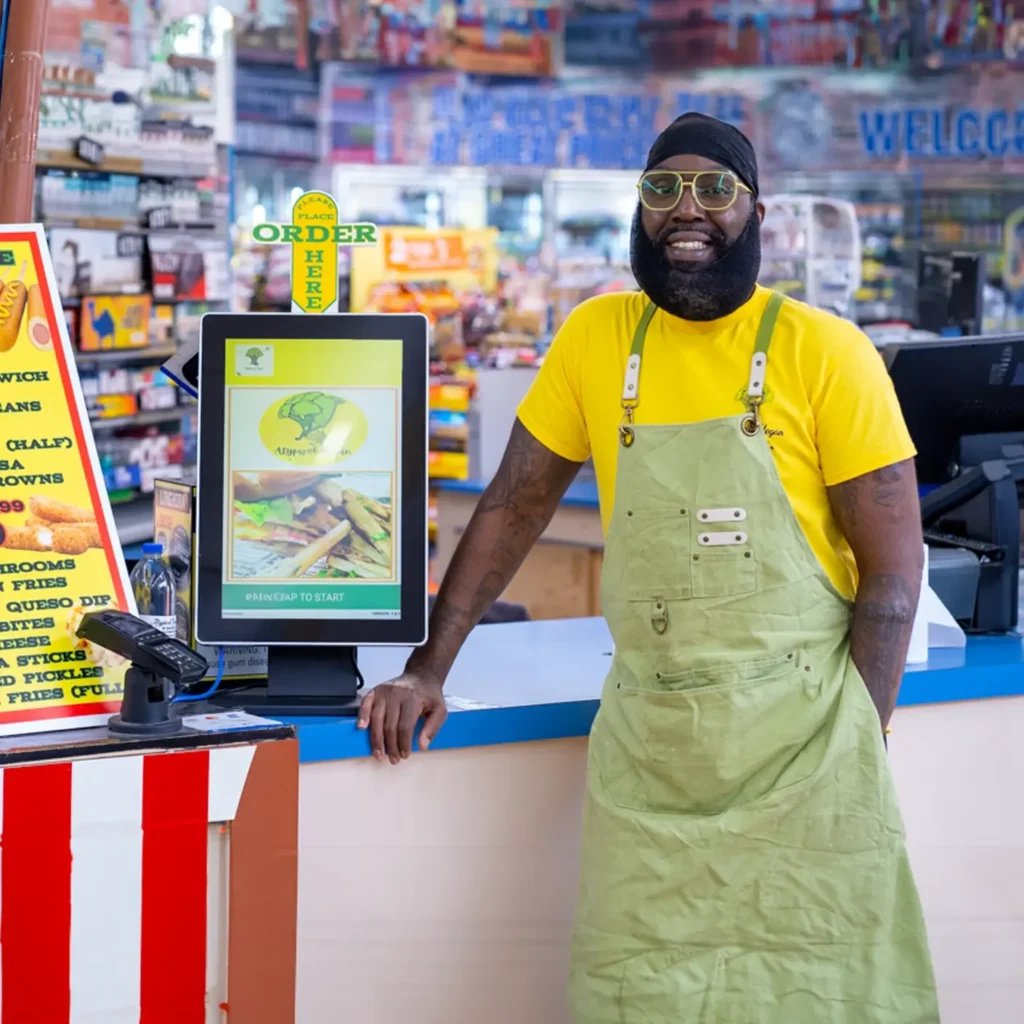
Pye, the leading self-ordering kiosk provider, announces new integration with Shift4 Skytab Marketplace

Pye, the leading self-ordering kiosk provider, announces new integration with Shift4 Skytab Marketplace

Pye, a leading self-ordering technology firm, has integrated with SkyTab, the leading restaurant point-of-sale (POS) solution from Shift4. The partnership allows tens of thousands of restaurants using SkyTab to connect with Pye to seamlessly enhance their self-service capabilities.

Through SkyTab, businesses can deploy one of the industry’s leading technology systems that has helped merchants nationwide enhance the customer experience by reducing lines and speeding order fulfillment. At the same time, they can make their operations more efficient, reduce labor costs and increase revenue and profitability

SkyTab POS is a best-in-class restaurant technology solution designed to streamline operations, simplify business management and improve the guest experience. It includes integrated online ordering and reservations, contactless/QR code ordering and payment, built-in marketing tools and loyalty program, mobile devices for tableside ordering and payment and comprehensive reporting.

The company’s inclusion happens as self-service technology becomes commonplace worldwide. In fact, a new report from the Journal of the Academy of Marketing Science, shows that digital ordering methods lead consumers to higher overall spending. This effect attenuates for consumers with a high degree of technology acceptance and suggests that restaurant managers desiring more indulgent purchases would benefit from having digital ordering modes available. 

“We’re always expanding the SkyTab ecosystem to include offerings that meet the needs of all types of restaurants,” said Jay Shavitz, SVP of SkyTab Product. “This integration with Pye delivers a powerful self-service solution to help our customers reduce costs and operate more efficiently.”

“This is a huge opportunity for any financial technology firm,” said Jegil Dugger, CEO and founder of Alabama-based Pye. “We’re confident in the ability of our kiosks but, more importantly, in our ability to help our company and all of our partners thrive.”

About Pye

Pye designs and engineers an array of self-service solutions – both the hardware and the software to run them. Its technology includes a mix of products, from free-standing and tabletop models to mobile applications. Pye’s units are deployed in a host of restaurants, retail and hotels nationwide.  

About Shift4
Shift4 (NYSE: FOUR) is boldly redefining commerce by simplifying complex payments ecosystems across the world. As the leader in commerce-enabling technology, Shift4 powers billions of transactions annually for hundreds of thousands of businesses in virtually every industry. For more information, visit shift4.com.

Popular Posts

Kiosks help combat challenges facing restaurants, retailers

Kiosks help combat challenges facing restaurants, retailers

The prospect of mandated salary increases, in the form of minimum wage hikes, represents an opportunity for restaurants and retail businesses to reverse their operating models from that of a career launching pad to a career destination where satisfaction is high and the ability to earn enough to support a family is plausible.

“Businesses overcome challenges all the time,” said Jegil Dugger, co-founder and CEO of self-service solutions firm Pye. “Minimum wage increases, though, always seem to be a black-and-white issue: covering increased pay means taking drastic measures. The good thing is that this is not an overnight change and actually was inevitable. So owners have time to strategize how an increase in the minimum wage can be a positive impact to their operations.”

Part of the answer to reshaping a business model centers on investment – in people and in technology.

To the latter, technology such as kiosks increasingly has emerged as cornerstones of the new business model in the restaurant and retail industries, and the digital solutions will play an even larger role moving forward. Here’s a couple of key reasons why:

Compliment the workforce

Kiosks are intended to supplement the workforce. Critics in the past have described the technology as a facade, disguised as mechanical replacements for labor, which represents part of a restaurant or retailer’s largest expense alongside food and supplies.

But with many businesses still struggling to hire enough workers to attain full staff in the post-COVID environment, they can use kiosks to stand in as stable members of the staff that come at a fixed cost – a cost they’ve largely already paid.

Improve the customer experience

Long lines generally mean long wait times. And those two serve to sour customers who expect efficiency and speed with their orders.

At high-traffic times, kiosks can be used to enable customers to order and pay on demand, keeping them from having to congregate with others in front of a bank of registers. At fast casual eateries, the units allow diners sitting at tables to place their orders through the device, which connects wirelessly to the restaurant’s main point-of-sale system and kitchen displays, sending their request directly to the cooks. They don’t have to wait for a server, who may be tied up with other tables or duties.

Decreased wait times increase the consumer experience and keep those diners coming back.

Popular Posts

Preventing mistakes with Pye cash kiosks

Preventing mistakes with Pye cash kiosks

Mistakes happen. But when mistakes happen in a restaurant or retail establishment where 20% of the bottom line is fed by cash-carrying customers, mistakes can translate into big losses and even threaten a business’ survivability.

Self-service kiosks help minimize cash losses stemming from miscounting, mishandling and even theft.

While most devices at the point of sale only process electronic transactions, several units with Pye’s suite of self-service solutions stand out for their ability to accept payments with dollar bills, quickly and accurately counting inserted money and dispensing change as appropriate.

“More people handling money equals more chances for human error to enter into the mix,” said Jegil Dugger, founder and CEO of Pye. “It also becomes difficult to trace errors back to the source, which means it is difficult to fix them.”

In this age dominated by electronic payments, cash remains a force in businesses where bill totals are relatively small. CreditCards.com reported that cash is the preferred payment method even among credit card rewards members. Some 43 percent of shoppers opted to pay cash for purchases of less than $10.

More notably to the broader business community, 88% of consumers indicated that they use cash for purchases at least occasionally. That makes kiosks capable of handling bills more appealing – to both restaurant owners, retailers and consumers.

“Consumers aren’t carrying around huge amounts of cash with them, so they aren’t likely to spend huge amounts,” Dugger said. “Still, businesses need the ability to accommodate someone preferring to pay with cash. A solution that incorporates cash payments makes your kiosks truly self-service.”

Popular Posts

Self-service kiosks help to minimize wait times

Self-service kiosks help to minimize wait times

Little raises consumers’ ire than standing in a long line. And one that’s barely moving only fuels their frustration.

They want their visit to a restaurant or retailer to be one that is smooth and hassle-free, not marred by irritation and sluggish lines. Consumers often pay big bucks for food or merchandise. They don’t want to spend big minutes waiting to order or check out.

Self-service kiosks can be game-changers. Research shows that use of the technology makes the process of ordering and paying twice as fast.

That’s vital to restaurants and retailers. The ability to move customers through more quickly means more people can be served, translating into increased revenue and a greater profit share.

Reducing long lines will increase our profit, businesses say. The technology’s design speeds up the overall operation, allowing them serve more customers in a shorter time while increasing revenue and customer satisfaction.

That fact that kiosks are commonplace worldwide means most consumers have at least a decent – if not an expert – level of familiarity with technology’s functionality. A unit in use at a restaurant or retailer isn’t likely to catch shoppers off guard. They’ll simply walk up, flip through the available items onscreen or key in their products and pay with a card.

“When I go somewhere, I just want to scan my card and don’t need a receipt,” said Jegil Dugger, founder and CEO of Pye. “That’s what most people are going to do.”

Popular Posts

Investment in kiosks proves positive ROI for restaurants, retailers

Investment in kiosks proves positive ROI for Restaurants, Retailers

Even with the COVID-19 pandemic over, the restaurant and retail industries continue to struggle to regain their footing when it comes to staffing.

Scores of operators have limped along, overwhelmed by demand. Others have turned to technology – namely self-service kiosks – to turn the employment tide in their favor.

“Owners have to strategize on how best to answer such significant challenges,” said Jegil Dugger, founder and CEO of self-service solutions firm Pye. “Technology is a key part of the solution. Kiosks are the transactional tools now and of the future.”

Innovation is serving as the driver for momentous change within the restaurant and retail industries. The incorporation of technology into everyday business practices, however, represents something of a slippery slope of potential scrutiny.

Technology is often assailed as a job and business killer instead of as a solution that brings about efficiency and effectiveness. What typically gets lost in the conversation – and was absent through much of the pandemic – is the role technology can play in bridging the gap from one income level to another.

Part of the answer to shaping the way forward centers on investment in technology, Dugger says.

Technology such as self-service kiosks increasingly has emerged as cornerstones of the new business model, and the digital solutions are playing an even larger role in the post-outbreak environment.

With technology expanding the capabilities and tasks users can perform on their own, there is not as much need for workers standing around the machines to provide guidance. Managers can reposition staff during busy hours to focus on other tasks instead of those that could easily be done through a machine.

Besides that, kiosks can stand in as stable members of the staff that come at a fixed cost – a cost companies largely pay for upfront. There are no training expenses, and businesses don’t have to ensure these “workers” have breaks. They’re always on, ready to serve.

“Businesses, particularly those built on service, want immediate solutions, but also long-term, permanent solutions to futureproof their operations against adversity,” Dugger said. “The kiosk industry has long billed this technology as a viable tool for most any business. These are effective solutions that are meeting emerging needs.”

Popular Posts

Using kiosks to close employment gaps

Using Kiosks to Close Employment Gaps

Oddly enough, kiosks, until recently, had been largely deemed a detriment to the future of workers. And companies producing and promoting the self-service solutions took a verbal beating, accused by many of peddling technology designed to bolster restaurants’ bottom lines by displacing workers.

Manufacturers countered that their technology was designed instead to complement staffs, helping make operations more efficient and effective in generating more revenue.

Now, struggling mightily to fill positions from entry level to leadership roles, what are businesses to do?

“Businesses, particularly those built on service, are desperate for not only a stop-gap solution but also a long-term, permanent solution to futureproof their operations against adverse events such as this,” said Jegil Dugger, CEO and co-founder of self-service solutions firm Pye.

In the face of an historic labor shortage that at one point was deemed an “emergency” by the U.S. Chamber of Commerce stemming from a number of factors, including the debate over increasing the national minimum wage, kiosks are being cast in a different light. The units increasingly are being brought onboard in restaurants and retailers across the country.

The shallow labor pool has left operators little choice. They aren’t using kiosks to replacing workers. These are their workers.

“The kiosk industry has always touted this technology as a viable piece of most any business that handles transactions, as they generally come at a fixed cost,” Dugger said. “You don’t have to train them. You don’t have to ensure they have breaks. You don’t have to account for times when they aren’t able to make it in for their shifts. They are the new mainstays of the global workforce.”

Pye used the pandemic as an opportunity to change potentially negative perceptions about kiosks and their impact on hiring. The company has talked with many restaurant and retail leaders to explain how self-service solutions fit positively into the strategic mix.

Pye features a number of kiosk options, including free-standing machines and pay-at-the-table tablets. All devices accept card and cash payments.

“Businesses always are looking for something that will give them an edge,” Dugger said. “With the unprecedented challenges today in the food and service industries, there’s perhaps no better time to do that than now.”

Popular Posts

Self-service kiosks help to minimize wait times

Self-service kiosks help to minimize wait times

Little raises consumers’ ire than standing in a long line. And one that’s barely moving only fuels their frustration.

They want their visit to a restaurant or retailer to be one that is smooth and hassle-free, not marred by irritation and sluggish lines. Consumers often pay big bucks for food or merchandise. They don’t want to spend big minutes waiting to order or check out.

Self-service kiosks can be game-changers. Research shows that use of the technology makes the process of ordering and paying twice as fast.

That’s vital to restaurants and retailers. The ability to move customers through more quickly means more people can be served, translating into increased revenue and a greater profit share.

Reducing long lines will increase our profit, businesses say. The technology’s design speeds up the overall operation, allowing them serve more customers in a shorter time while increasing revenue and customer satisfaction.

That fact that kiosks are commonplace worldwide means most consumers have at least a decent – if not an expert – level of familiarity with technology’s functionality. A unit in use at a restaurant or retailer isn’t likely to catch shoppers off guard. They’ll simply walk up, flip through the available items onscreen or key in their products and pay with a card.

“When I go somewhere, I just want to scan my card and don’t need a receipt,” said Jegil Dugger, founder and CEO of Pye. “That’s what most people are going to do.”

Recent Posts

Preventing mistakes with Pye cash kiosks

Preventing mistakes with Pye cash kiosks

Mistakes happen. But when mistakes happen in a restaurant or retail establishment where 20% of the bottom line is fed by cash-carrying customers, mistakes can translate into big losses and even threaten a business’ survivability.

Self-service kiosks help minimize cash losses stemming from miscounting, mishandling and even theft. While most devices at the point of sale only process electronic transactions, several units with Pye’s suite of self-service solutions stand out for their ability to accept payments with dollar bills, quickly and accurately counting inserted money and dispensing change as appropriate.

“More people handling money equals more chances for human error to enter into the mix,” said Jegil Dugger, founder and CEO of Pye. “It also becomes difficult to trace errors back to the source, which means it is difficult to fix them.”

In this age dominated by electronic payments, cash remains a force in businesses where bill totals are relatively small. CreditCards.com reported that cash is the preferred payment method even among credit card rewards members. Some 43 percent of shoppers opted to pay cash for purchases of less than $10.

More notably to the broader business community, 88% of consumers indicated that they use cash for purchases at least occasionally. That makes kiosks capable of handling bills more appealing – to both restaurant owners, retailers and consumers.

“Consumers aren’t carrying around huge amounts of cash with them, so they aren’t likely to spend huge amounts,” Dugger said. “Still, businesses need the ability to accommodate someone preferring to pay with cash. A solution that incorporates cash payments makes your kiosks truly self-service.”

Recent Posts

Kiosks help combat challenges facing restaurants, retailers

Kiosks help combat challenges facing restaurants, retailers

The prospect of mandated salary increases, in the form of minimum wage hikes, represents an opportunity for restaurants and retail businesses to reverse their operating models from that of a career launching pad to a career destination where satisfaction is high and the ability to earn enough to support a family is plausible.

“Businesses overcome challenges all the time,” said Jegil Dugger, co-founder and CEO of self-service solutions firm Pye. “Minimum wage increases, though, always seem to be a black-and-white issue: covering increased pay means taking drastic measures. The good thing is that this is not an overnight change and actually was inevitable. So owners have time to strategize how an increase in the minimum wage can be a positive impact to their operations.”

Part of the answer to reshaping a business model centers on investment – in people and in technology.

To the latter, technology such as kiosks increasingly has emerged as cornerstones of the new business model in the restaurant and retail industries, and the digital solutions will play an even larger role moving forward. Here’s a couple of key reasons why:

Compliment the workforce

Kiosks are intended to supplement the workforce. Critics in the past have described the technology as a facade, disguised as mechanical replacements for labor, which represents part of a restaurant or retailer’s largest expense alongside food and supplies.

But with many businesses still struggling to hire enough workers to attain full staff in the post-COVID environment, they can use kiosks to stand in as stable members of the staff that come at a fixed cost – a cost they’ve largely already paid.

Improve the customer experience

Long lines generally mean long wait times. And those two serve to sour customers who expect efficiency and speed with their orders.

At high-traffic times, kiosks can be used to enable customers to order and pay on demand, keeping them from having to congregate with others in front of a bank of registers. At fast casual eateries, the units allow diners sitting at tables to place their orders through the device, which connects wirelessly to the restaurant’s main point-of-sale system and kitchen displays, sending their request directly to the cooks. They don’t have to wait for a server, who may be tied up with other tables or duties.

Decreased wait times increase the consumer experience and keep those diners coming back.

Recent Posts

Effective Business Success Through the Impact of Self-Ordering Technology

Effective Business Success Through the Impact of Self-Ordering Technology

Self-ordering technology has been hailed as the future of restaurant operations. The future is now. Millions of people order and pay for their food via a kiosk every day. Eventually, all restaurants will implement self-ordering technology thanks to the numerous benefits to businesses and ability to better cater to consumer demand.

But successful self-ordering technology deployment isn’t as simple as stationing a kiosk in the lobby, turning it on and expecting people to use it. An effective kiosk strategy hinges on three considerations:

Location: An idle kiosk doesn’t help a business. That’s why they should be placed in high-traffic spots and along the path of the current cashier, ideally within five to 10 steps in proximity to the cashier area. Kiosks should be highly visual and easy to locate for guests entering the business. Kiosks such as those available through Pye provide versatile options – free-standing, tabletop or countertop.

The spot the machine will occupy will help a business decide the kind of unit it needs. If space is limited, the business might consider a tabletop or wall-mounted unit. If space is not at a premium or the company wants its machine to standout, it might opt for a free-standing model.

Guidance: Consumers know how to use kiosks these days, but they need to know it’s there for them to use. If your objective is for customers to use it, have it resemble a giant exclamation point that screams, “Use me!” Even something as simple as a “order here” sign hanging over a kiosk can go a long way toward driving activity. Without adequate signage, prospective users may otherwise bypass the devices. In fact, kiosks should be marketed as any other product or service.

People are naturally attracted to lights, so lights shining atop devices can easily signal customers of a unit’s presence. The advent of LEDs has given savvy entrepreneurs the ability to do more than simply turn lights on or have them flash. The technology allows them to change colors and go on and off in patterns for an original look and feel.

LEDs put off a brightness that is comparable and, in many cases, brighter than traditional bulbs. LEDs, too, are touted for their output consistency, achieving maximum output instantly.

Adoption: As with anything new, implementation isn’t always flawless. Hiccups are inevitable, and in many cases, likely. Especially with customers unfamiliar with the device’s functionality. It typically takes 90 days to six months – oftentimes dictated by the makeup and technological savviness of guests – to smooth out the adoption process. During that time, cashiers can be redesignated from behind a counter to the lobby to assist customers in using kiosks.
By comparison, self-check-in kiosks in airports took time to catch on with passengers. So hosts spent time educating flyers on how to retrieve boarding passes and check their bags. Over time, passengers gravitated to the devices, finding that using kiosks reduced their time in line and got them on the way to their gate more quickly. Now, passengers largely rely on kiosks, even without a host present. While new technology can be intimidating to customers, employees and business owners, a proper adoption plan makes the process less daunting. 
These three areas of consideration are critical to successfully implementing self-ordering technology. Carefully determining proper location, clearly conveying to customers that a kiosk is there for them and orchestrating a plan for adoption all serve to set up a business for success in making the operation more efficient and effective.

Popular Posts